Equipment failures don’t just disrupt operations—they put lives at risk. One overlooked step during maintenance can lead to accidental machine startups, causing serious injury or even fatalities. That’s where a lockout tagout (LOTO) program becomes non-negotiable.
The foundation of an effective LOTO program? A clear, standardized procedure—and that starts with a reliable lockout tagout template. While many organizations assume they can wing it with verbal agreements or informal checklists, only documented, consistently applied procedures prevent accidents and satisfy OSHA requirements.
A free lockout tagout template isn’t just a cost-saving tool—it’s a force multiplier for safety culture. It ensures every technician follows the same sequence, from shutting down machinery to verifying isolation and re-energizing equipment. More importantly, it creates accountability and traceability, turning safety from an idea into action.
Let’s break down how to use a free template effectively, where to find practical options, and what to watch for to avoid common compliance pitfalls.
What Is a Lockout Tagout Template and Why It Matters
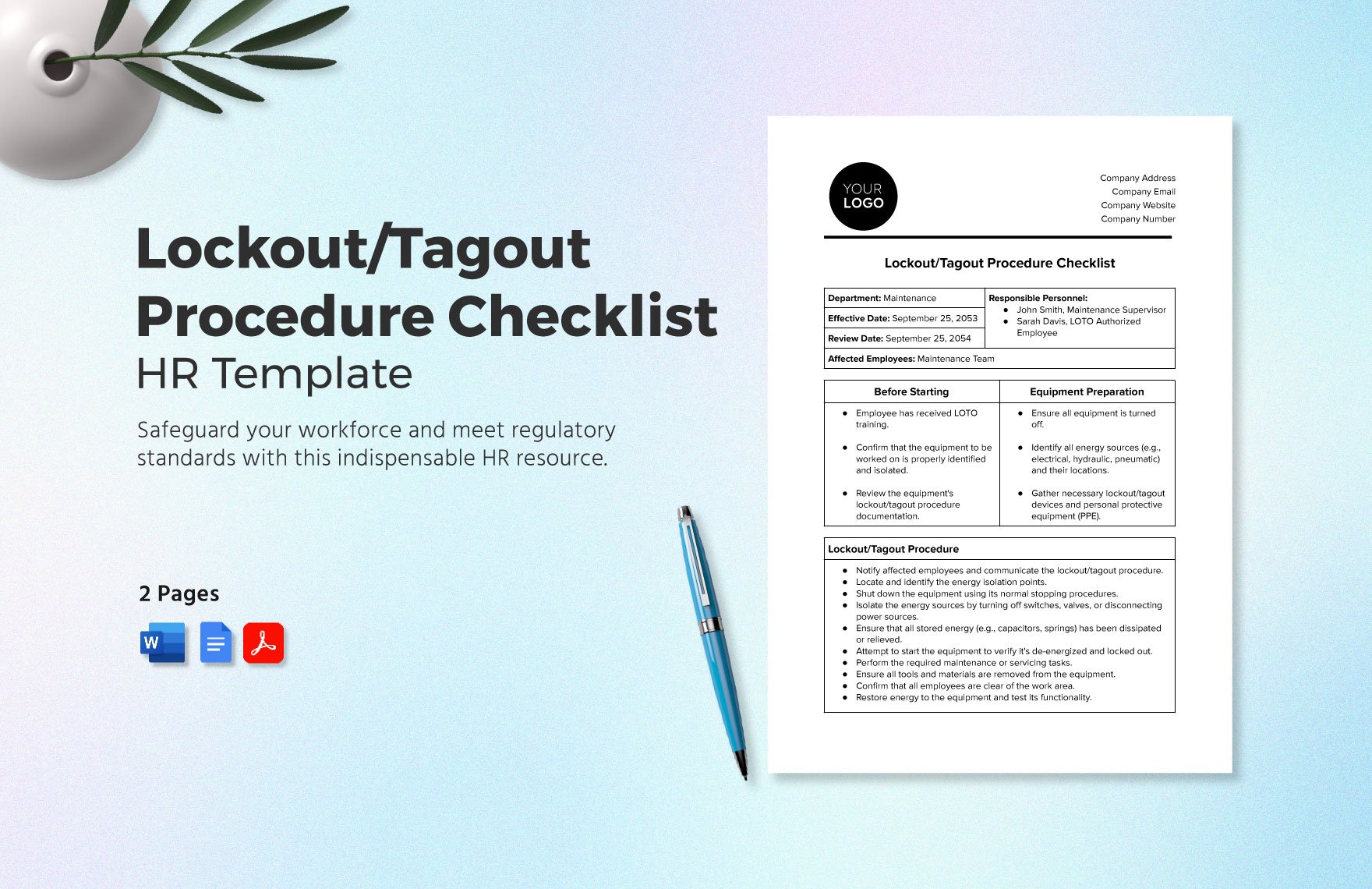
A lockout tagout template is a structured document that outlines the step-by-step process for safely de-energizing machines before maintenance or servicing. It standardizes how workers isolate energy sources—electrical, hydraulic, pneumatic, chemical, thermal, or mechanical—and apply physical locks and tags to prevent accidental reactivation.
At its core, a LOTO template serves three critical functions:
- Clarity: Defines exact shutdown and startup procedures tailored to specific equipment.
- Compliance: Supports adherence to OSHA 29 CFR 1910.147, which mandates energy control programs.
- Accountability: Tracks who applied locks, when, and when equipment was cleared for operation.
Without a template, procedures become inconsistent. One worker might assume a machine is safe after flipping a switch. Another might not verify residual energy. A well-designed template eliminates guesswork by making each step mandatory and visible.
For example, consider a conveyor system in a packaging plant. A free lockout tagout template for this machine would include: - Specific shutdown sequence (main power, motor disconnect) - Location of energy isolation points - Required lock types and tag information - Verification methods (e.g., trying to start the machine after lockout) - Authorized personnel checklist
This isn’t bureaucratic overhead—it’s operational hygiene. And the best templates are simple enough for daily use but detailed enough to pass an OSHA audit.
Key Elements of an Effective Free LOTO Template
Not all free templates are created equal. Many downloadable versions online are generic, missing crucial details like equipment-specific steps or proper verification protocols. To be truly useful, your lockout tagout template must include these non-negotiable components:
1. Equipment Identification Clearly list the machine name, model, ID number, and location. Example: “Conveyor Belt #3 – Packaging Line A, West Wing.” This avoids confusion during multi-equipment maintenance.
2. Energy Source Mapping Detail every type of hazardous energy involved. For a CNC press, this might include: - Primary electrical disconnect - Hydraulic pressure lines - Pneumatic valves - Stored mechanical tension

The template should mark where each energy source is isolated.
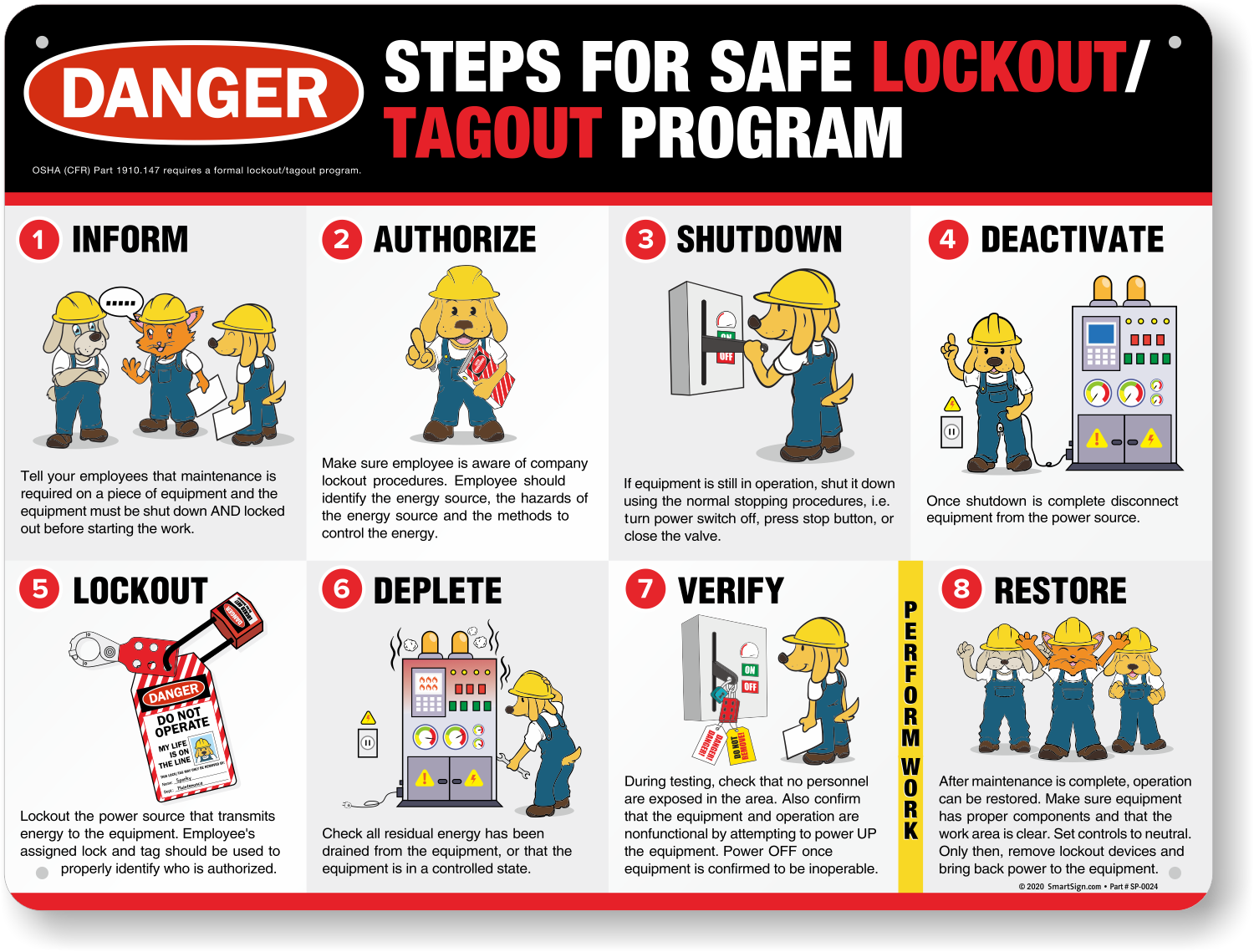
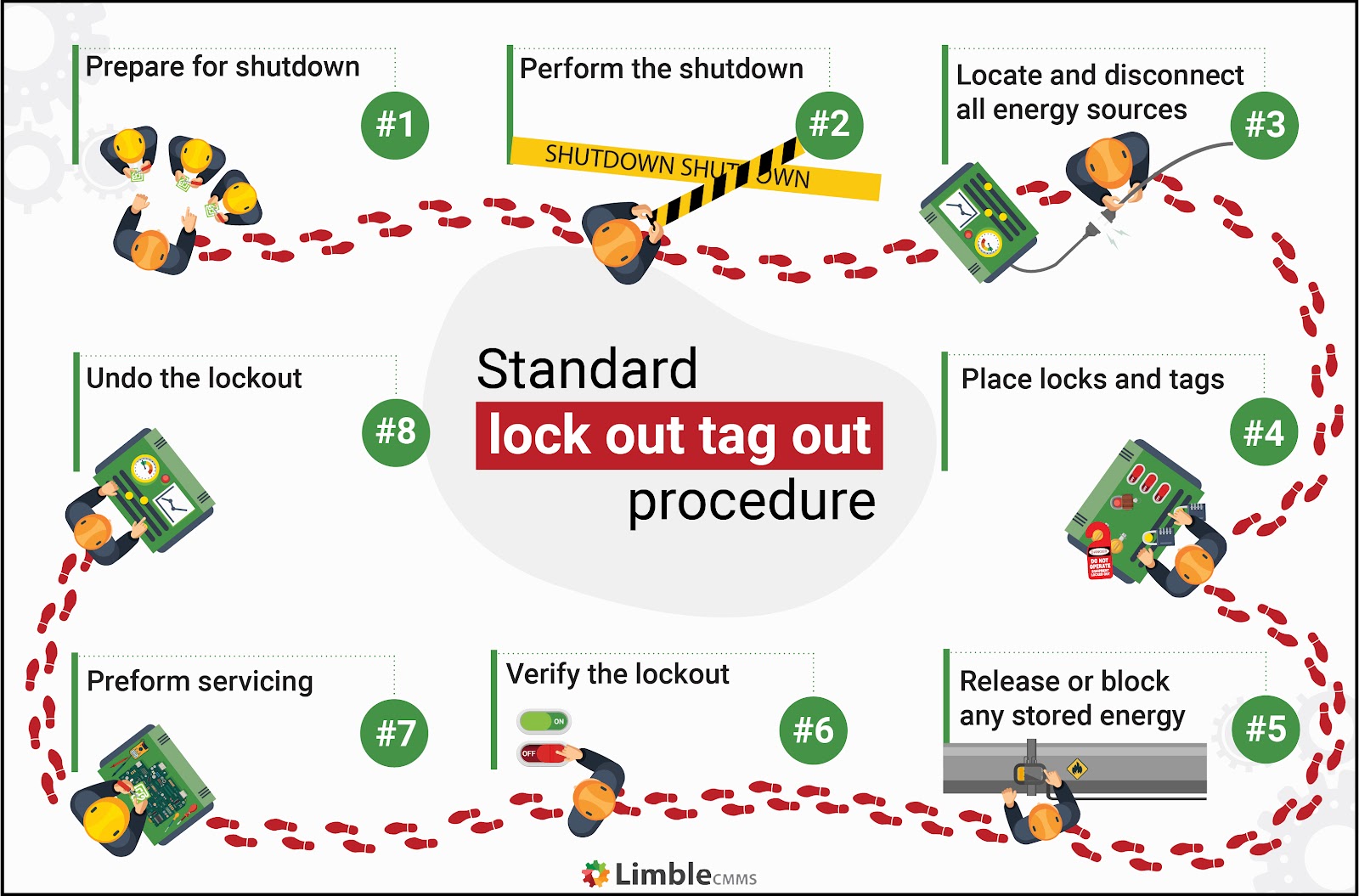
3. Step-by-Step Procedures Break down actions in chronological order:
- Notify affected personnel
- Shut down using normal controls
- Isolate energy sources (list breakers, valves, etc.)
- Apply lockout devices
- Release stored energy (bleed lines, block moving parts)
- Verify zero energy state (attempt to start)
Each step should be checkable and sign-off ready.
4. Authorized Personnel Section Include space for:
- Name and signature of employee applying lock
- Date and time of lock application
- Supervisor verification
- Clearance signature upon completion
This creates an audit trail.
5. Visual Aids (Preferred) Diagrams or photos showing lock placement locations significantly reduce errors. A simple schematic of a motor disconnect panel with red “X” marks where locks go makes the process foolproof.
Templates lacking these elements invite human error. A paper with just “turn off machine” and “apply lock” isn’t a safety tool—it’s a liability.
Where to Find Reliable Free Lockout Tagout Templates
You don’t need to build a LOTO template from scratch. Several reputable sources offer downloadable, customizable versions—completely free.
Here are five trusted options:
| Source | Template Format | Customization Level | Key Features |
|---|---|---|---|
| OSHA.gov | PDF / Word | High | Official compliance alignment, clear structure |
| Graphic Products | PDF / Editable | High | Includes visual layout guides, ANSI-compliant |
| Creative Safety Supply | Word / Excel | Full edit | Equipment-specific fields, multilingual tags |
| SafetySkills | Medium | Training-integrated, audit-ready | |
| LockoutTagout.com | Word / PDF | High | Step-by-step flow, verification checklist |
Each of these can be adapted to your facility’s needs. For example, OSHA’s base template is a strong starting point, but adding site-specific diagrams from Graphic Products enhances usability.
Pro Tip: Avoid templates from unknown blogs or forums. Many contain outdated language or skip verification steps, putting your compliance at risk.
How to Customize a Free Template for Your Facility
Downloading a template is only step one. True effectiveness comes from tailoring it to your operations.
Start by conducting a machine-by-machine audit. For each piece of equipment requiring maintenance: - Identify all energy sources - Locate isolation points - Determine lock types (padlocks, valve locks, circuit breakers) - Name authorized personnel
Then, update your free template with this data.
For instance, a printing press might need: - Main power disconnect at 480V panel - Air pressure bleed at secondary valve - Mechanical lock on roller assembly - Two-person verification due to complexity
Your customized template should reflect this. Use Word or Excel versions to insert tables, checkboxes, and photos directly.
Also, consider workflow integration. Print laminated copies near machines. Store digital versions on tablets used by maintenance crews. Embed them in CMMS (Computerized Maintenance Management Systems) if available.
One manufacturing client reduced LOTO errors by 70% simply by adding QR codes on equipment tags that linked to the correct digital template.
Common Mistakes to Avoid with Free LOTO Templates
Even with a solid template, companies fail by making preventable errors. Watch for these red flags:
- Using one template for all machines: A boiler and a drill press have vastly different energy risks. Generic procedures don’t cut it.
- Skipping verification steps: Never assume energy is off. The “try to start” test is mandatory—document it.
- Allowing shared locks or group lockout confusion: Each worker must apply their own lock. Templates should include individual lockout blocks.
- Failing to update after equipment changes: Modified machinery = revised procedure. Re-audit and reissue templates.
- Poor training integration: A template is useless if workers don’t understand it. Pair it with hands-on drills.
One food processing plant had a perfect template—but no one verified hydraulic release. A technician was injured when a valve released stored pressure. The root cause? The template said “release energy” but didn’t specify “open bleed valve and confirm pressure gauge reads zero.”
Precision saves lives.
Integrating the Template into Daily Operations
A LOTO template shouldn’t live in a binder on a shelf. It must be part of your maintenance rhythm.
Here’s how to operationalize it:
- Include in Work Orders: Attach the correct LOTO template to every maintenance ticket.
- Use During Shift Handovers: If a lock remains overnight, document it in the log with tag ID, reason, and responsible party.
- Conduct Monthly Audits: Pick 2–3 random procedures and observe workers using the template. Are they skipping steps? Is the template clear?
- Train New Hires with It: Turn the template into a live training tool. Have them walk through a mock lockout using the document.
- Digitize for Speed: Use mobile forms (via apps like SafetyCulture or Fulcrum) so technicians can complete and sign LOTO checklists on tablets.
One pharmaceutical facility tied template usage to their permit-to-work system. No digital LOTO completion = no work authorization. Compliance jumped from 62% to 98% in six months.
Why Free Doesn’t Mean Low Value
There’s a myth that free resources are inherently inferior. With lockout tagout templates, that’s false. The best templates—like those from OSHA or industry safety leaders—are free precisely because they’re designed to reduce workplace injuries.
What matters isn’t cost—it’s correct implementation.
A $500 software suite won’t help if workers don’t follow procedures. But a well-structured, free Word document used consistently will protect your team every day.
The real value isn’t in the file format. It’s in the discipline of using it, reviewing it, and refining it over time.
Download, Customize, and Deploy Today
A free lockout tagout template is more than a document—it’s a frontline defense against preventable harm. Start with a reliable version from OSHA or a trusted safety provider. Customize it for each machine, train your team, and embed it in daily workflows.
Don’t wait for an incident to expose gaps in your energy control process. A few hours of setup now can prevent a lifetime of regret.
Download your free template today. Fill in your equipment details. Print copies. Assign locks. And make safety a standard, not a slogan.
Frequently Asked Questions
What is the OSHA requirement for lockout tagout procedures? OSHA 29 CFR 1910.147 requires written procedures for servicing equipment with hazardous energy. Each procedure must detail shutdown, isolation, lock application, and verification steps.
Can I use a single template for all machines? No. Each machine or piece of equipment must have a specific procedure based on its energy sources and shutdown sequence.
Who should fill out the lockout tagout template? Authorized employees—those trained in energy control—who are performing the servicing or maintenance.
Do I need to include diagrams in the template? While not mandatory, diagrams significantly improve clarity and reduce errors, especially for complex machinery.
How often should LOTO procedures be reviewed? Annually, or whenever equipment changes, new hazards are identified, or an incident occurs.
Can digital templates be used for compliance? Yes. OSHA accepts electronic versions if they’re accessible, tamper-proof, and include signatures or digital verification.
Are free templates legally valid? Yes, as long as they meet OSHA’s written procedure requirements and are properly implemented and followed.
FAQ
What should you look for in Free Lockout Tagout Template for Workplace Safety Compliance? Focus on relevance, practical value, and how well the solution matches real user intent.
Is Free Lockout Tagout Template for Workplace Safety Compliance suitable for beginners? That depends on the workflow, but a clear step-by-step approach usually makes it easier to start.
How do you compare options around Free Lockout Tagout Template for Workplace Safety Compliance? Compare features, trust signals, limitations, pricing, and ease of implementation.
What mistakes should you avoid? Avoid generic choices, weak validation, and decisions based only on marketing claims.
What is the next best step? Shortlist the most relevant options, validate them quickly, and refine from real-world results.