Every year, workers suffer severe injuries—or worse—because machinery starts unexpectedly during maintenance. A valve opens. A conveyor kicks on. A press lowers. In seconds, lives change. The solution is simple in concept but critical in execution: lock out tag out safety. When properly applied, LOTO isn’t just compliance—it’s a shield.
This isn’t about checking boxes. It’s about ensuring that when a technician reaches into a machine, they do so knowing it cannot energize. Across manufacturing, utilities, healthcare, and construction, lock out tag out safety systems save limbs, prevent fatalities, and maintain operational integrity. But too often, shortcuts are taken. Procedures are incomplete. Training lags. And when energy isn’t fully isolated, the consequences are brutal.
Let’s cut through the noise and focus on what actually works—real-world LOTO strategies that protect people and satisfy regulations.
What Is Lock Out Tag Out Safety?
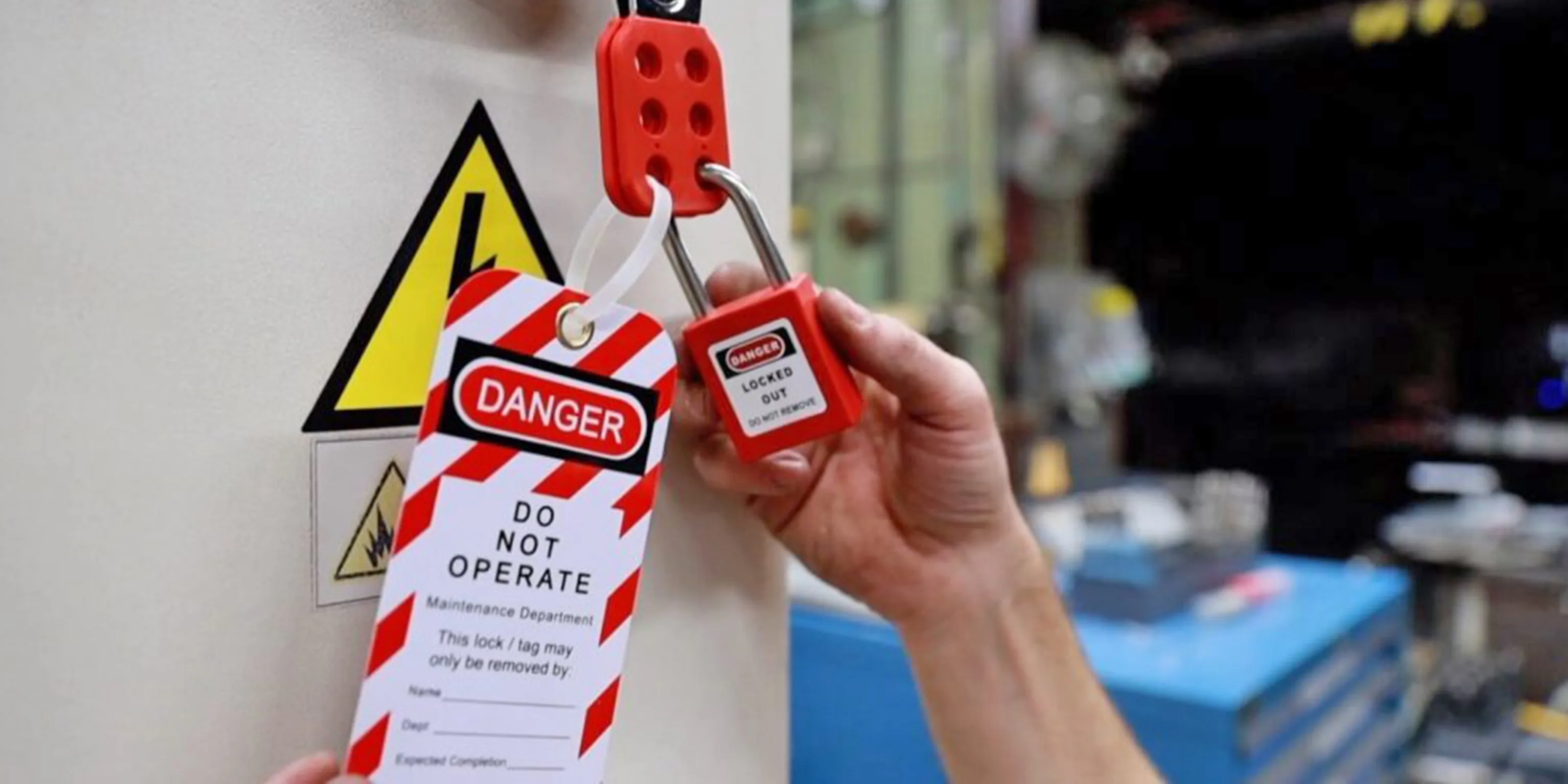
Lock out tag out (LOTO) is a safety procedure used to ensure that dangerous machines and energy sources are properly shut off and cannot be restarted until maintenance or servicing is complete. The system combines physical locks and informational tags to secure energy-isolating devices like circuit breakers, valves, and disconnect switches.
At its core, LOTO is about control. Control over electrical, mechanical, hydraulic, pneumatic, chemical, and thermal energy sources. Without it, workers face risks ranging from electrocution to crushing injuries. OSHA estimates that proper lock out tag out safety adherence prevents over 120 fatalities and 50,000 injuries annually in the U.S.
How LOTO Differs from Simple Shutdown
Turning off a machine isn’t enough. A simple shutdown doesn’t physically prevent re-energizing. Lock out tag out safety requires:
- Lockout: Applying a physical lock to an energy-isolating device.
- Tagout: Attaching a warning tag that identifies who locked the device, when, and why.
While tagout alone is permitted in some cases, lockout is preferred because it provides a physical barrier to accidental startup.
Why Lock Out Tag Out Safety Fails in Practice
Even companies with LOTO programs experience incidents. Why? Because procedures are poorly designed, inconsistently applied, or bypassed due to production pressure.
Common failure points include:
- Incomplete energy isolation: Failing to identify all energy sources (e.g., stored hydraulic pressure).
- Group lockout confusion: Multiple workers servicing one machine without a primary lockout device.
- Lack of verification: Not testing to confirm the machine is truly de-energized.
- Tag degradation: Tags fade, fall off, or are ignored due to overuse.
- Improper lock removal: Someone else removes a lock without following transfer protocols.
One study found that 40% of LOTO-related injuries occurred when workers bypassed procedures because they believed the machine was “safe enough.” That mindset kills.
Real-World Example: In 2022, a maintenance worker at a food processing plant reached into a mixer to clear a jam. The machine wasn’t locked out—just turned off. A coworker restarted it remotely. The result: catastrophic hand injury. Investigation revealed no formal LOTO procedure existed for that equipment.
This wasn’t an anomaly. It was a systems failure.
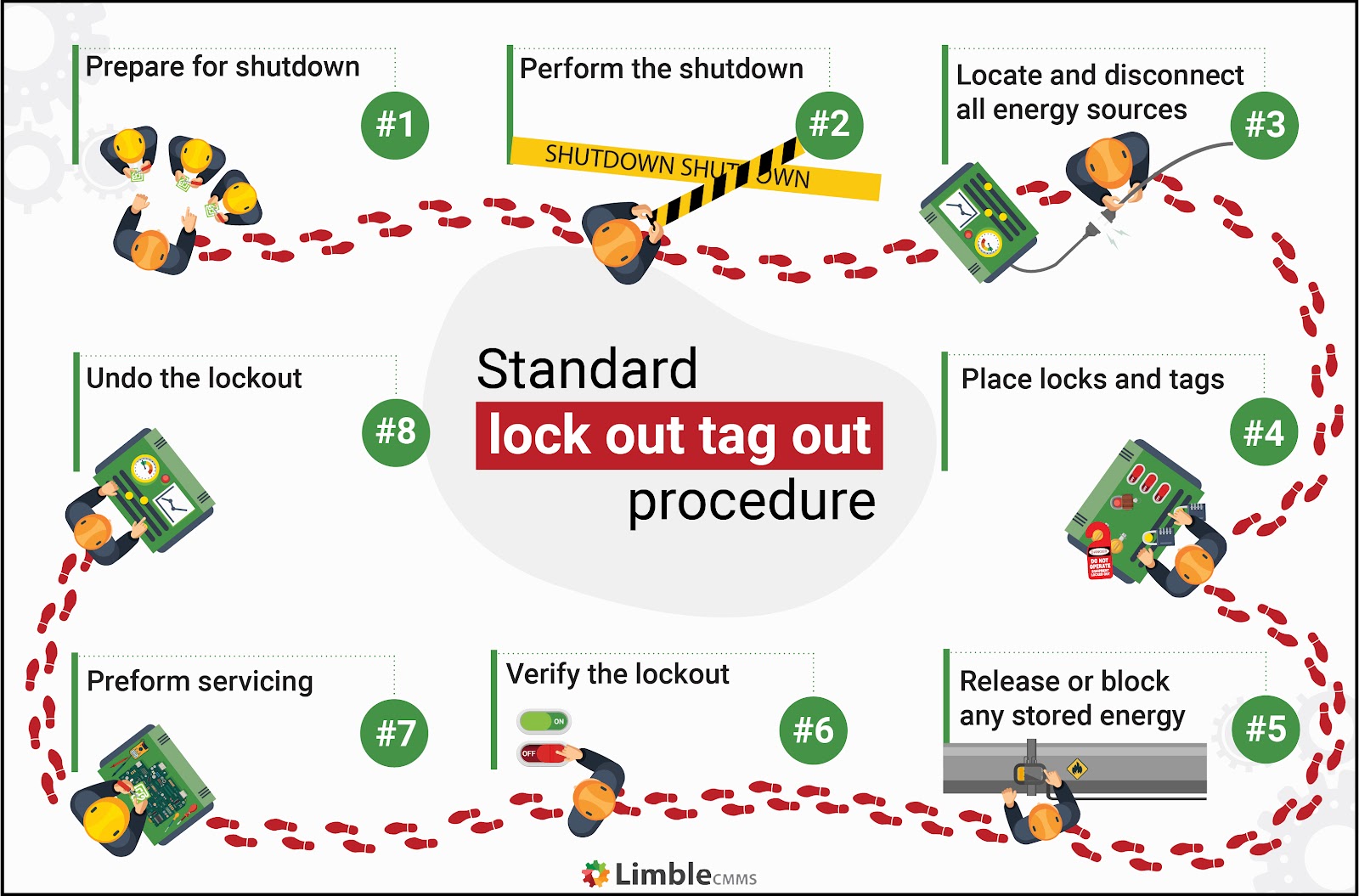
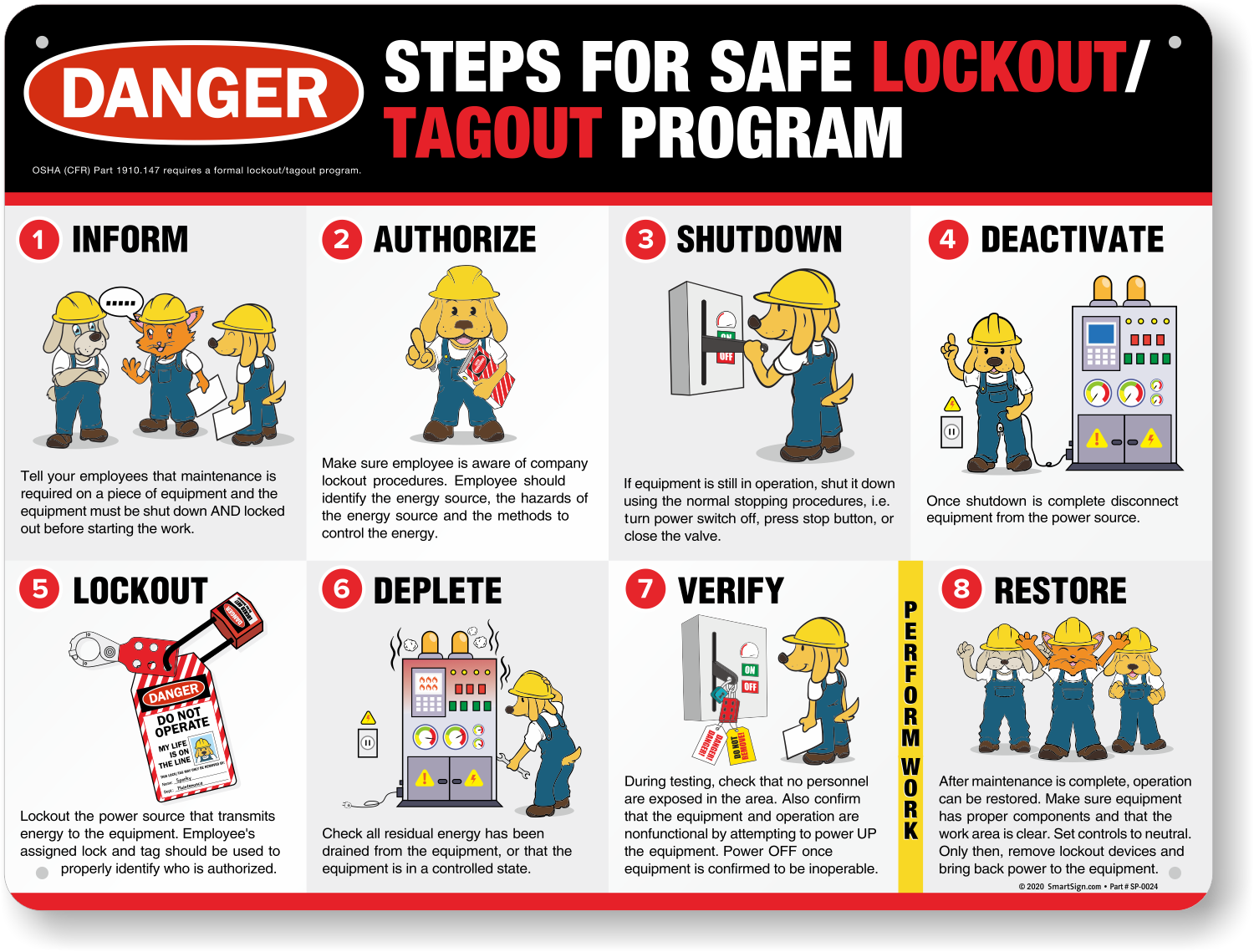
The 6-Step Lock Out Tag Out Safety Procedure
A standardized process reduces variability and improves adherence. OSHA outlines a clear sequence—here’s how to execute it effectively:
1. Prepare for Shutdown Identify the type and magnitude of energy sources. Review the machine-specific LOTO procedure. Gather locks, tags, and tools.
Pro Tip: Create visual LOTO maps for complex machinery. A diagram showing all isolation points prevents missed valves or breakers.
2. Notify Affected Personnel Warn operators and nearby staff that maintenance is about to begin. Ensure everyone understands the machine will be out of service.
3. Shut Down the Equipment Use normal stopping procedures. Don’t rely on emergency stops as isolation methods.
4. Isolate Energy Sources Turn off and disconnect all energy supplies. This includes main power, auxiliary lines, and stored energy (springs, capacitors, elevated parts).
5. Apply Locks and Tags Each worker applies their own lock and tag. Use lockout hasps for group work. Tags must include: - Employee name - Date and time - Reason for lockout
6. Verify Zero Energy
This is the most critical step. Attempt to start the machine using normal controls. If it operates, the lockout failed. Also, test for residual energy—bleed lines, ground circuits, or block moving parts.
Common Mistake: Skipping verification because “we know it’s off.” Always test—lives depend on it.
Industry-Specific LOTO Challenges One-size-fits-all doesn’t work. Different industries face unique energy risks.
Manufacturing High-speed machinery with multiple energy inputs (electrical, pneumatic, mechanical). Frequent changeovers increase LOTO complexity.
Use Case: A CNC machine requires isolation of main power, hydraulic lines, and robotic arm actuators. A single missed valve can cause uncontrolled movement.
Healthcare Medical equipment like MRI machines store intense magnetic energy. Even when unplugged, they pose risks.
Use Case: Servicing an MRI requires not only electrical lockout but also quenching the magnet—a specialized, high-risk procedure.
Utilities High-voltage systems, confined spaces, and remote locations complicate lockout. Often, multiple crews work on interconnected systems.
Use Case: A substation repair requires coordination between field technicians and control room operators. Miscommunication can lead to accidental re-energizing.
Construction Portable tools and temporary power setups make standardization difficult. Equipment is often shared across sites.
Use Case: A jackhammer with a hydraulic power unit needs both the engine and fluid line locked out—two separate energy sources.
LOTO Devices and Tools That Work
Not all locks and tags are equal. Choose equipment designed for durability and compliance.

| Device | Purpose | Best For |
|---|---|---|
| Padlocks | Primary lockout | Individual control |
| Hasp Locks | Group lockout | Multiple workers |
| Valve Lockouts | Isolate fluid lines | Pneumatic/hydraulic systems |
| Circuit Breaker Locks | Secure electrical panels | Electrical maintenance |
| Safety Tags | Communicate warnings | All energy types |
Key Selection Criteria:
- Non-releasable shackles: Prevent removal without cutting.
- Weather-resistant materials: For outdoor or washdown environments.
- Universal fit: Devices that adapt to multiple equipment types.
- Color coding: Red for energy isolation, yellow for caution.
Limitation: Plastic tags degrade under UV light. Use vinyl or polyester in sunny environments.
Developing a LOTO Program That Sticks
A compliant program isn’t just a binder on a shelf. It’s living, trained, and audited.
Essential components:
- Machine-specific procedures: One procedure per equipment type, not per facility.
- Authorized vs. Affected employee training: Authorized workers apply locks; affected workers understand the system.
- Annual audits: Inspect 10–20% of procedures yearly. Full review every 3 years.
- Documentation: Keep records of training, audits, and incident investigations.
Workflow Tip: Use digital LOTO checklists via tablets or mobile apps. Real-time logging reduces paperwork and increases accountability.
One plant reduced LOTO violations by 78% in 18 months simply by switching to visual, step-by-step digital guides accessible on the shop floor.
Common Misconceptions About Lock Out Tag Out Safety
Myth 1: “If it’s just a quick fix, I don’t need LOTO.” Reality: Most injuries happen during short-duration tasks. Speed kills.
Myth 2: “I can use a zip tie instead of a lock.” Reality: OSHA prohibits makeshift devices. Only hasp-secured locks are compliant.
Myth 3: “My supervisor can remove my lock if I’m late.” Reality: Locks can only be removed under strict transfer procedures—not unilaterally.
Myth 4: “LOTO is only for electrical equipment.” Reality: Any hazardous energy source—mechanical, chemical, thermal—requires control.
Build a Culture Where LOTO Is Non-Negotiable
The best procedures fail without the right culture. Workers must feel empowered to stop work when safety is compromised.
Signs of a strong LOTO culture: - Employees speak up about missed steps. - Supervisors prioritize safety over speed. - Near-misses are reported and reviewed. - Locks are never shared or bypassed.
Example: A steel mill implemented “LOTO Champions”—employees trained to audit peers. Within a year, compliance rose from 62% to 94%.
Leadership matters. When managers model compliance, others follow.
Final Thoughts: LOTO Is Not Optional—It’s Essential
Lock out tag out safety isn’t a bureaucratic hurdle. It’s the difference between a technician going home whole or not going home at all. Every lock applied, every tag read, every verification test—it’s all part of a system that respects human life over output.
Start here: - Audit your current LOTO procedures. - Train every authorized employee—not just the ones who “know it already.” - Verify isolation every single time. - Empower workers to stop unsafe acts.
Compliance is the floor, not the ceiling. Excellence in lock out tag out safety means building a system that’s simple, visible, and unforgiving of shortcuts. Because when energy escapes, it doesn’t warn you first.
Frequently Asked Questions
What is the main purpose of lock out tag out safety? To ensure machines are de-energized and cannot be restarted during maintenance, preventing injury from unexpected startup.
Who is responsible for applying lockout devices? Each authorized employee performing servicing must apply their own lock and tag.
Can tagout be used instead of lockout? Yes, in limited cases where lockout isn’t feasible, but only if the tagout system provides equivalent protection.
How often should LOTO procedures be reviewed? At least annually, and whenever equipment or processes change.
What happens if a worker forgets to remove their lock? The lock can only be removed following a formal procedure, including verification that the worker is safe and aware.
Are temporary tasks exempt from LOTO? No. Any servicing where hazardous energy could be released requires LOTO, regardless of duration.
Does OSHA require employee training for LOTO? Yes. Authorized employees must be trained initially and annually, with documented retraining.
FAQ
What should you look for in Lock Out Tag Out Safety: The Ultimate Guide to Hazard Control? Focus on relevance, practical value, and how well the solution matches real user intent.
Is Lock Out Tag Out Safety: The Ultimate Guide to Hazard Control suitable for beginners? That depends on the workflow, but a clear step-by-step approach usually makes it easier to start.
How do you compare options around Lock Out Tag Out Safety: The Ultimate Guide to Hazard Control? Compare features, trust signals, limitations, pricing, and ease of implementation.
What mistakes should you avoid? Avoid generic choices, weak validation, and decisions based only on marketing claims.
What is the next best step? Shortlist the most relevant options, validate them quickly, and refine from real-world results.